
Contact Us
Send A Message
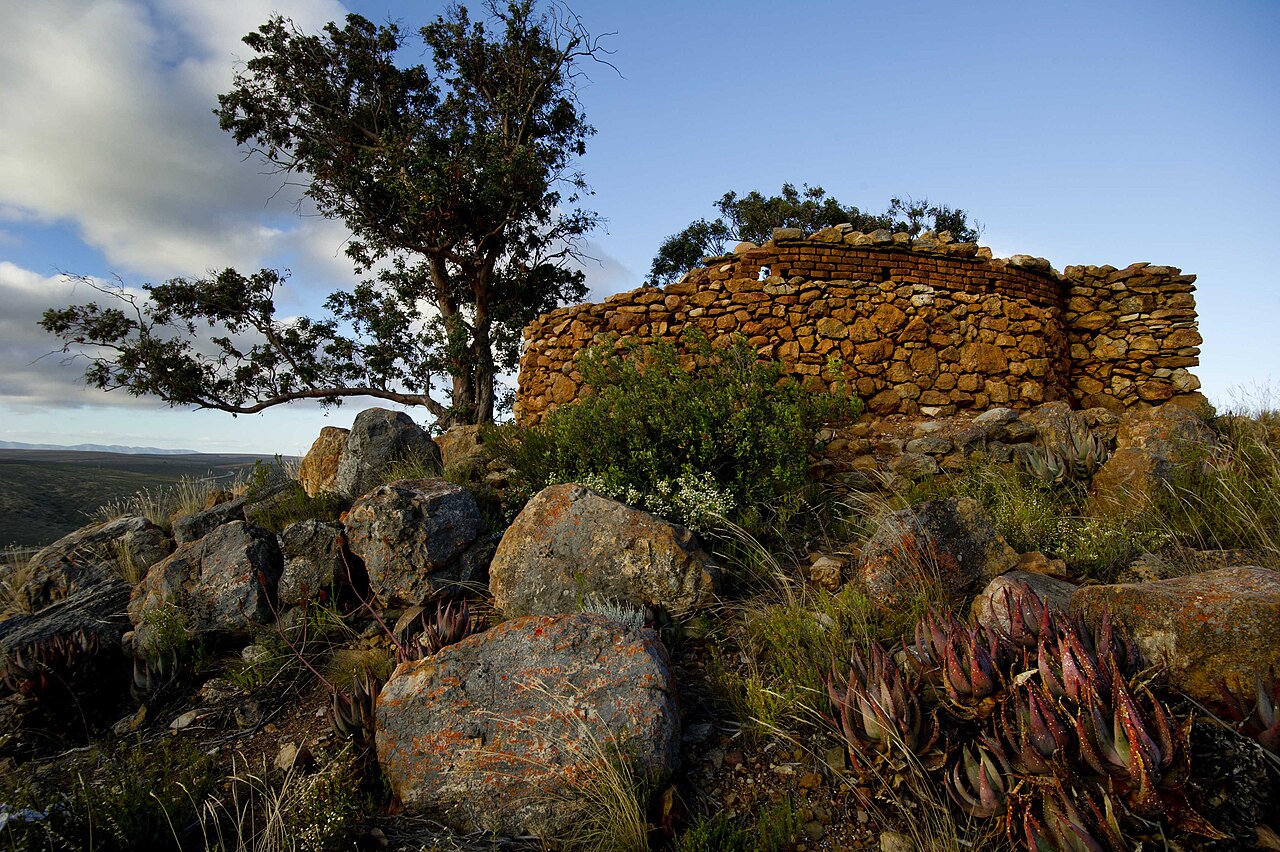
Uniondale
Is built on its status as a “hidden gem” of the Little Karoo, balancing a “quaint and simple” atmosphere with its primary—and somewhat controversial—claim to fame: the Uniondale Ghost. In 1968 Maria Roux accident occurs, spawning the ghost legend that has since inspired books, songs, and the 2014 film Die Spook van Uniondale.
“More Than a Ghost Story” for years, Uniondale’s marketing has been dominated by the legend of the Vanishing Hitchhiker, Maria Roux, who died in a car accident in 1968. While this draws paranormal enthusiasts and curious travellers, modern local tourism now focuses on a broader narrative:
The “Slow Life” Experience: Positioned as a place where “time slows down,” Uniondale markets its authenticity—a town that doesn’t try to be anything but itself.
Architectural Time Capsule: With seven National Monuments and minimal modern development, the town is marketed as an outdoor museum of Victorian and Karoo architecture.
Adventure Gateway: Recent branding highlights it as a hub for extreme nature, specifically for the Lions Karoo to Coast mountain bike race and as the northern entrance to the spectacular Prince Alfred Pass.
For Booking & Inquiries
Call Us
+27 (0) 44 518 0030
(Rico Classen)
+27 (0)44 752 1076
Email Us
uniondaleinfo@gmail.com
Location
Office
1 Kerk Street, Uniondale, 6460
Mailing
1 Kerk Street, Uniondale, 6460
Landmark Heritage
Watermill (1854): Built by James Stewart, it features the largest water wheel in South Africa (and some claim the Southern Hemisphere).
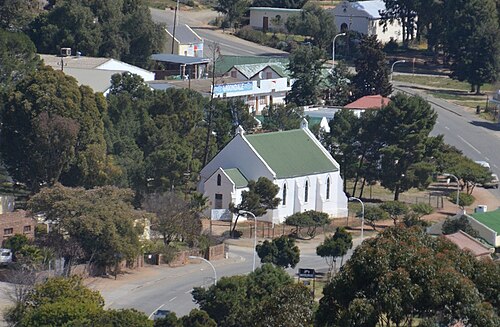
All Saints Anglican Church (1876): Designed by Sophia Gray, South Africa’s first female ecclesiastical architect.
The Jewish Synagogue (1905): A testament to the town’s once-thriving Jewish community, led by figures like Israel Shear; it is famous for its unique murals.
The Muted Bells: The Dutch Reformed Church (1886) bells are famous for being “muted” because the original tower cracked under their weight, requiring them to be fixed to a static wooden beam.
The area was inhabited by San people; over 500 rock art paintings found nearby, dating back up to 6,000 years.
Uniondale is officially formed through the “union” of two settlements: Hopedale and Lyon.
The town become a major idustrial bug for wagon and cart builders, alongside a booming ostrich feather industry.
Uniondale was strategically important during the Anglo-Boer War; five British forts were built to defend it.
Commandant Gideon Scheepers occupied the town twice in 1901.