Klein Karoo
The Heart of the Dry Heartland: A Klein Karoo Story
The Klein Karoo isn’t just a place; it’s a feeling of vastness, ancient earth, and unexpected sweetness. Tucked between the towering Swartberg and Langeberg mountains, this “Little Karoo” is a world apart from the lush coast, offering a landscape of rugged beauty and hidden gems.
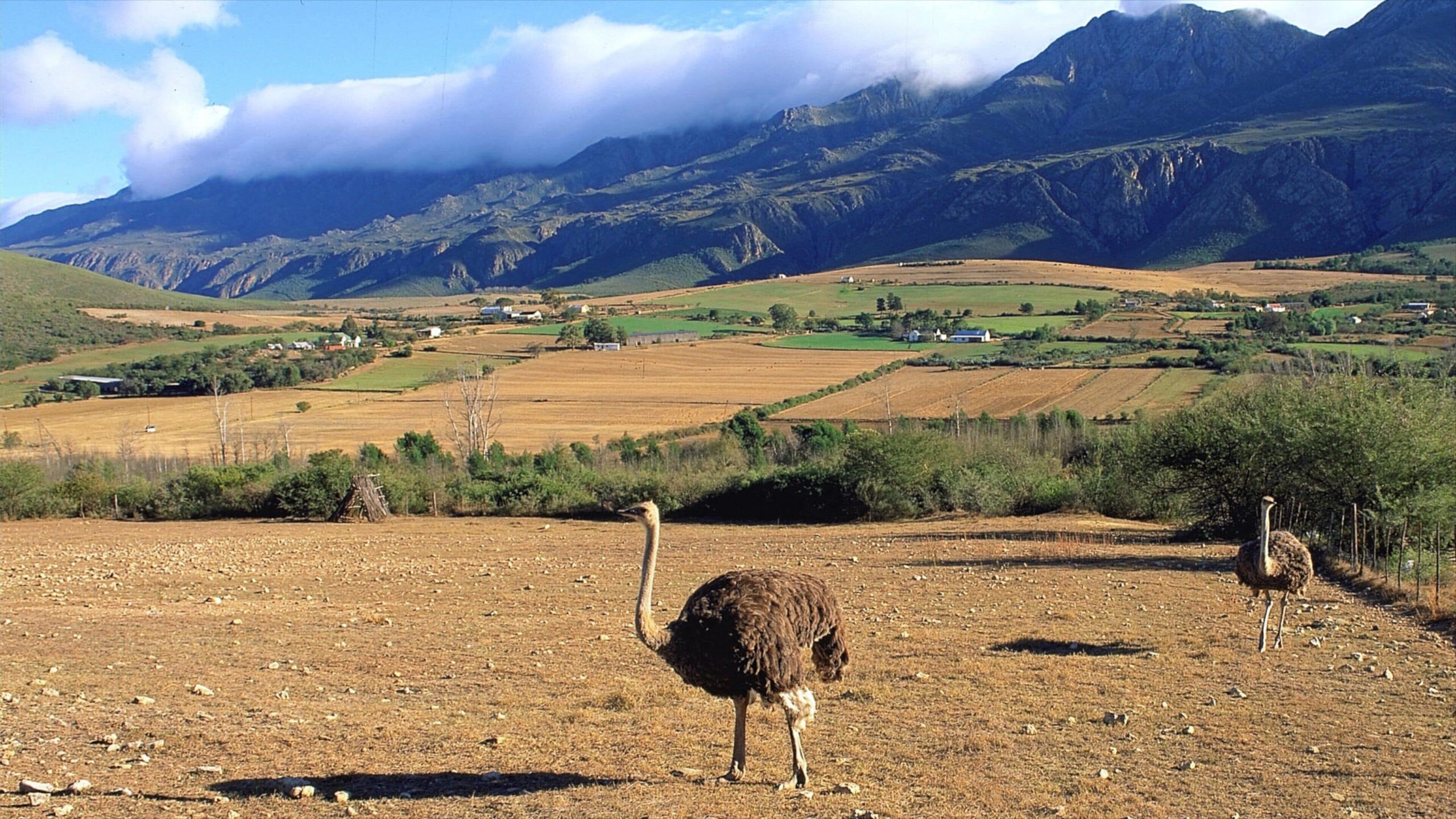
The Terrain: A sun-drenched valley defined by scrubby succulent karoo, dramatic folded mountains, and wide-open skies that turn violet at sunset.
The Microclimate: Unlike its larger brother (the Great Karoo), the Klein Karoo is more fertile, fed by mountain streams that allow vineyards and fruit orchards to thrive in the red dust.
The Route: It is home to the iconic Route 62, known as the shortest (and most scenic) link between Cape Town and the Garden Route.
First People: For thousands of years, the San and Khoekhoe roamed here, leaving behind delicate rock art in the sandstone caves of the mountains.
The Ostrich Boom: In the late 1800s and early 1900s, Oudtshoorn became the “Ostrich Capital of the World.” High fashion in Europe demanded feathers, creating “Feather Millionaires” who built the ornate sandstone “Ostrich Palaces” still standing today.
Agricultural Grit: The history is one of survival and ingenuity—farmers mastering the art of irrigation to grow lucerne, grapes, and stone fruit in a semi-desert.
Diversification: While farming remains vital, many estates have pivoted to boutique wine tourism, producing world-class Port-style wines and Muscadels.
Conservation: Tourism has fueled the protection of the Cango Caves, one of the world’s great natural wonders, and the preservation of the Cape Floral Kingdom (a UNESCO World Heritage site).
Cultural Revival: Events like the KKNK (Klein Karoo Nasionale Kunstefees) bring thousands of visitors annually, injecting millions into the local economy and keeping the unique Afrikaans heritage and hospitality (plattelandse gasvryheid) alive.
Eco-Tourism: The rise of “glamping” and off-grid retreats has allowed travellers to experience the silence of the Karoo without leaving a footprint, supporting local jobs in remote areas.