
Contact Us
Send A Message
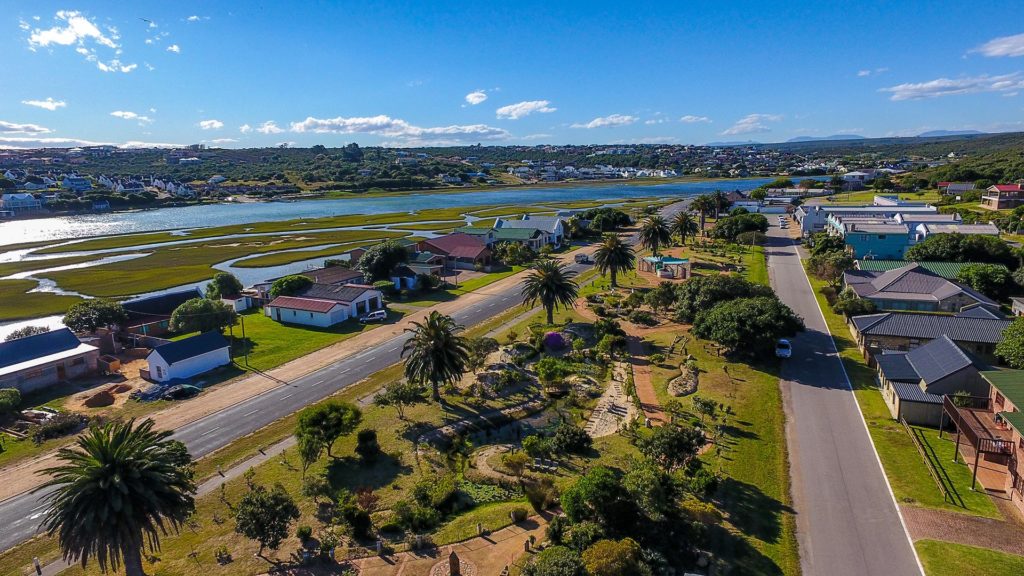
The Bay of Sleeping Beauty
Welcome to Stilbaai,where the tranquil Goukou River meets the warm Indian Ocean. Known as the “Bay of Sleeping Beauty,” this coastal gem offers a unique blend of prehistoric history and modern-day relaxation.
It is a place where you can watch tame eels being hand-fed in a natural fountain one moment and walk along Blue Flag beaches the next.
Stilbaai is a cornerstone of the Cradle of Human Culture. Its history stretches back over 70,000 years, with the nearby
For Booking & Inquiries
Call Us
+27 (0)28 754 2602
Email Us
Location
Office
Langenhoven Street, Stilbaai, 6674
Mailing
Langenhoven Street, Stilbaai, 6674
A Glimpse into the Past
The Blombos Museum of Archaeology,located in the historic Palinggat Homesteadd in Stilbaai, showcases world-renowned discoveries from the nearby Blombos Cave.
While the cave itself is a closed research site, the museum houses original artifacts and replicas that date back 70,000 to 100,000 years.
The World’s Oldest Art: A replica of a small piece of red ochre inscribed with a cross-hatched geometric pattern, dated to 75,000 years ago.
The World’s Oldest Necklace: Replicas of tiny Nassarius kraussianus (sea snail) shell beads. These shells were deliberately pierced and strung together as personal adornment roughly 75,000 years ago.
100,000-Year-Old Paint Workshop: Evidence of an ochre-processing kit found in abalone shells, showing early humans were mixed-media “chemists” who produced and stored liquid pigment.
Still Bay Points: Fine, leaf-shaped bifacial stone spear points made from silcrete. The museum displays examples showing early use of “pressure flaking” and heat treatment.
Rock Art Gallery: A collection featuring life-sized tracings and photographs of San rock art found in the Langeberg mountains and Hessequa region.
Survival & Diet Displays: Exhibits illustrating the Middle Stone Age diet, which included shellfish, fish, mammals, and edible fynbos.
Subscribe for Weekly Deals