Contact Us
Send A Message
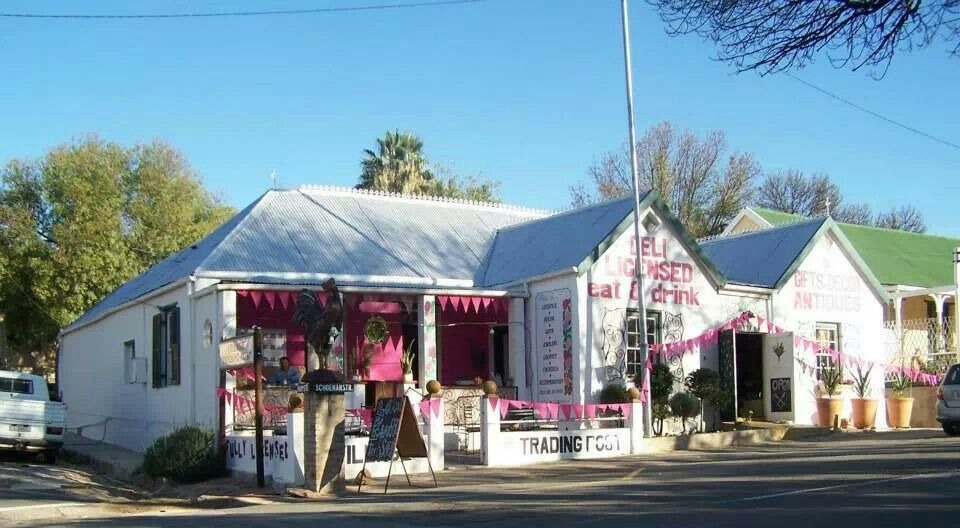
"Kick off your shoes in and around De Rust"
Respite & Tranquility: Historically a place to “outspan” and rest before tackling the Swartberg mountains, it is marketed today as a serene escape from city life.
The Victorian Village: De Rust is celebrated for its well-preserved Victorian architecture, with over 85% of its buildings located in a “Heritage Sensitive Area”.
The Mermaid & The Pink Elephant: Local folklore, such as the mermaid legend of the Meiringspoort waterfall and C.J. Langenhoven’s “Herrie se Klip” (a stone shaped like an elephant), adds a whimsical layer to its tourism appeal.
Artisanal & Nature Hub: The town markets itself as a base for exploring the Meiringspoort gorge, award-winning olive estates like De Rustica, and local art galleries.
The mermaid of Meiringspoort: Although many stories abound of travellers stranded in the Poort, picnics at New Years or leopards shot and Killed, nothing stirs the imagination as much as the story of the mermaids in the Meiringspoort.
For Booking & Inquiries
Call Us
+27 (0) 44 279 2532
+27 (0) 71 686 9795
Email Us
enquiries@oudtshoorn.com
info@oudtshoorn.com
Location
Office
Corner of Schoeman and Kerk Streets
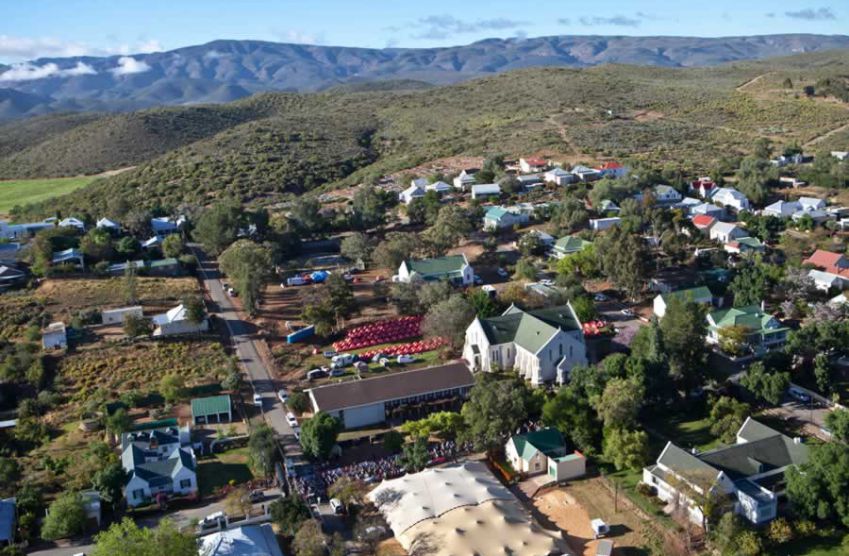
Despite its small size, De Rust boasts a wealth of historical charm. Walk along its quiet streets and discover well-preserved architectural gems that harken back to a bygone era. Engage with the locals, who are proud custodians of the town’s heritage, and gain insights into the history that has shaped De Rust into the inviting destination it is today.
Early Inhabitants: Long before colonial settlement, the area was home to the indigenous San people, drawn to its perennial springs and wildlife.
Meiringspoort Discovery: In the 1820s, Petrus Johannes Meiring discovered a route through the Swartberg mountains. A road was officially opened through the gorge in 1858, making the area a critical transport link.
Just make sure you remember the Mermaid!
Town Establishment: Following a land dispute among Meiring’s descendants, the farm De Rust was auctioned in 1899 to Johannes Jurgens Schoeman and Stephanus D.P. le Roux. They established the town in 1900.
Religious Roots: The Dutch Reformed Church, consecrated in 1902, remains a central historical landmark and a Provincial Heritage site.
Modern Milestones: The town was an independent municipality for much of the 20th century, finally receiving a formal water pipeline in 1965 and electricity in 1971.